
Lab Grown Pink Sapphire
Buying advice, quality & facts
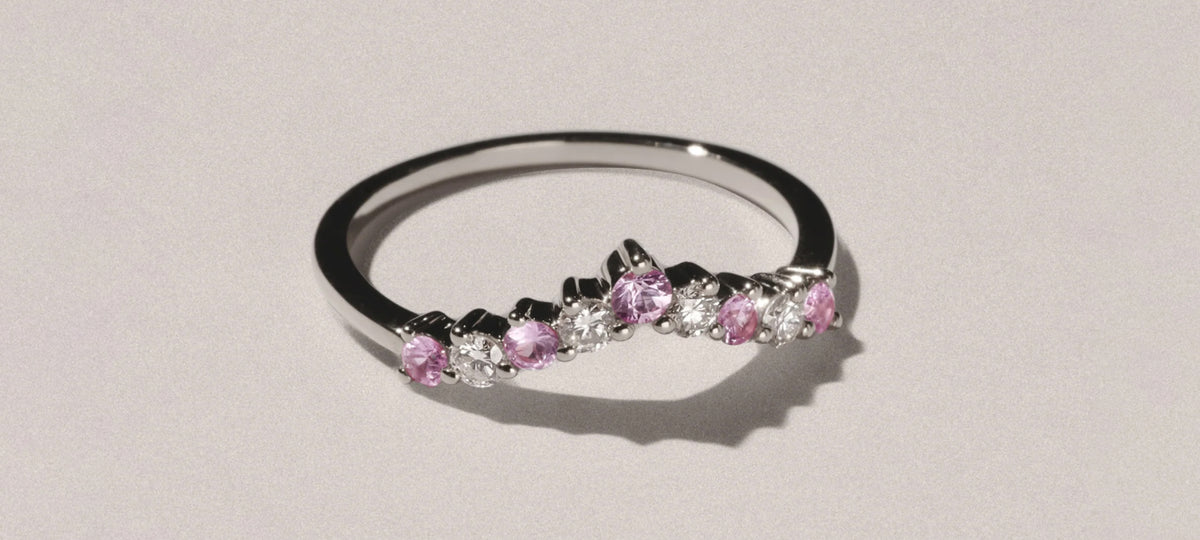
Buying advice, quality & facts


Lab-grown pink sapphires belong to the corundum mineral family, the same family as natural sapphires and rubies.
They are made from aluminium oxide, with trace elements such as chromium creating their distinctive pink colour. The concentration of these elements influences the shade, producing colours ranging from soft pastel pink to rich, vibrant magenta.
Like natural sapphires, lab-grown pink sapphires rank 9 out of 10 on the Mohs scale of hardness, making them one of the hardest gemstones used in fine jewellery.
The main difference between natural and lab-grown pink sapphires is their origin, not their fundamental gemstone properties.
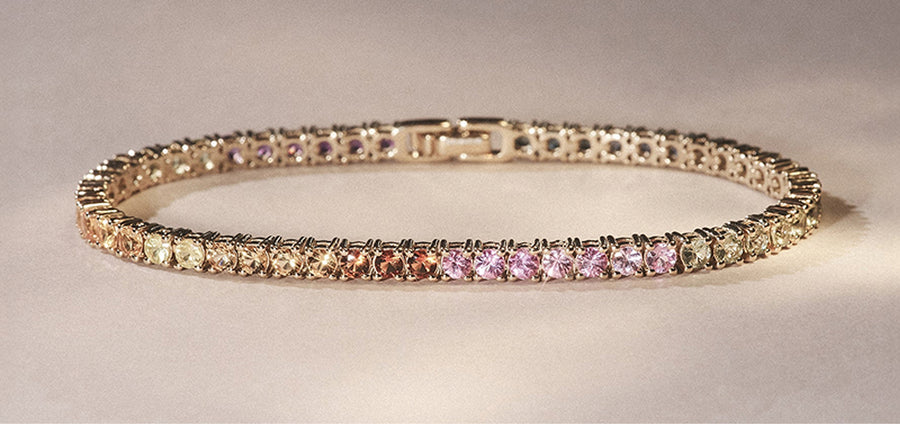
Unlike natural pink sapphires, which form beneath the Earth's surface, lab-grown pink sapphires are created in controlled laboratory environments.
Specialist techniques replicate aspects of the conditions needed for sapphire crystals to grow, allowing genuine corundum gemstones to be produced without mining.
The result is a lab-grown sapphire with the same essential chemical composition and hardness as its natural counterpart.
These include extreme heat, altered pressure and irradiation, which replicate the way in which intense volcanic forces created pink diamonds under the Earth’s surface.
Over a few weeks, the carbon atoms crystalise and grow into rough pink diamonds. Once they’re large enough, they can be carved into beautiful gems and worn in jewellery.
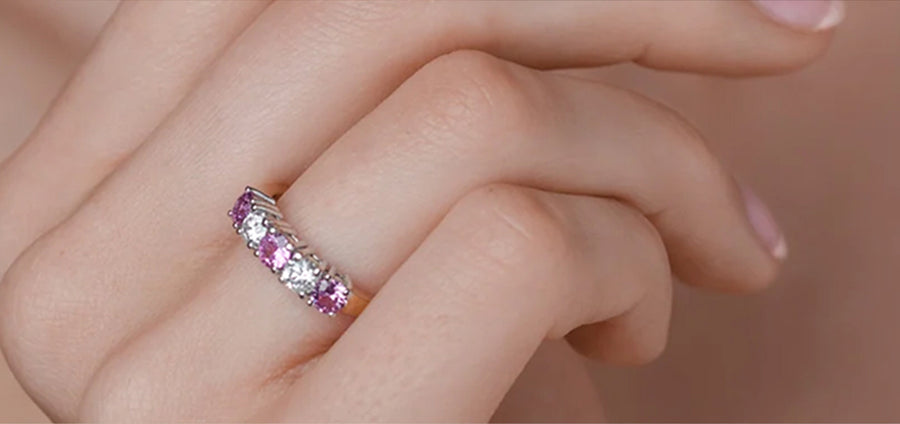
Sapphire is the traditional birthstone for September, and lab-grown pink sapphires share the same birthstone significance as natural sapphires.
Their romantic pink colour makes them a thoughtful choice for September birthdays, particularly for those who prefer something different from the traditional blue sapphire.
Sapphires are also associated with the 5th and 45th wedding anniversaries, symbolising lasting love and commitment. Pink sapphire is sometimes designated as the specific modern gemstone for the 8th anniversary too, symbolizing lasting love and partnership.
Pink sapphires traditionally represent love, compassion and sincerity, making lab-grown pink sapphire jewellery a meaningful gift for any anniversaries, engagements and life's special moments.
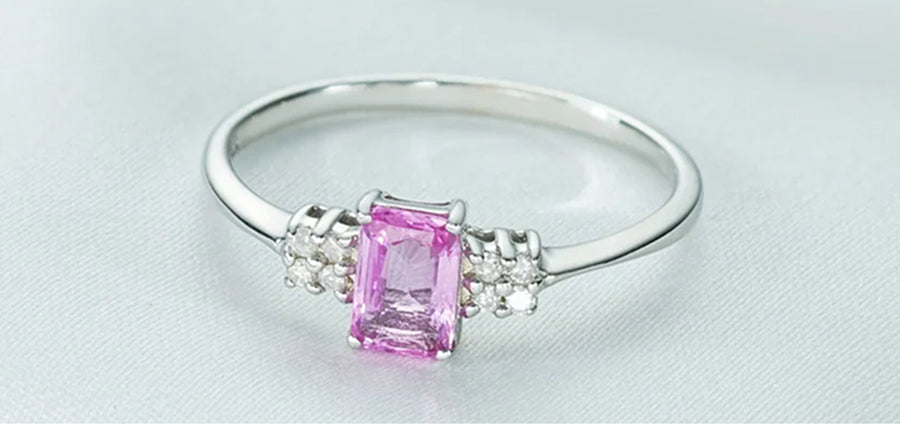
When choosing a lab-grown pink sapphire, the most important factors to consider are colour, clarity, cut and carat weight.
Because lab-grown gemstones are created in controlled environments, they can offer consistent colour and excellent clarity. However, individual gemstones can still vary in appearance and quality.
Look for a well-cut sapphire with attractive colour, good transparency and proportions that complement the jewellery design.
Lab-grown pink sapphires are available in shades ranging from delicate blush and rose pink to vivid fuchsia and deep magenta.
Their colour is influenced by trace elements introduced during the growth process, allowing a range of pink tones to be produced.
When choosing a lab-grown pink sapphire, look for an attractive, evenly distributed colour that appears vibrant rather than dull.
Whether you prefer a subtle pastel shade or a bold statement pink, the best choice comes down to personal preference.
Carat refers to a gemstone's weight rather than its physical size.
Unlike exceptional natural pink sapphires, which can become increasingly rare and expensive at larger sizes, lab-grown pink sapphires can offer a more accessible way to enjoy a substantial centre stone.
Remember that two gemstones of the same carat weight can appear different in size depending on their cut and proportions.
Some jewellery descriptions may also use an equivalent carat weight to describe a gemstone's approximate size compared with another stone. Always check whether the stated figure refers to actual weight or size equivalence.
Lab-grown pink sapphires can offer excellent clarity, with fewer visible inclusions than many natural gemstones.
However, this doesn't mean every lab-grown sapphire is flawless. Depending on the growth method, laboratory-created gemstones can still contain internal features such as growth lines or small inclusions.
When choosing a lab-grown pink sapphire, look for a gemstone that appears bright and transparent to the naked eye.
Avoid stones with obvious cloudiness or internal characteristics that detract from their overall appearance.
A well-cut lab-grown pink sapphire should enhance the gemstone's colour, brightness and overall beauty.
Popular shapes include oval, round, cushion and pear, each offering a different appearance.
Oval-cut pink sapphires are particularly popular in vintage-inspired engagement rings, while round cuts create a classic, symmetrical finish.
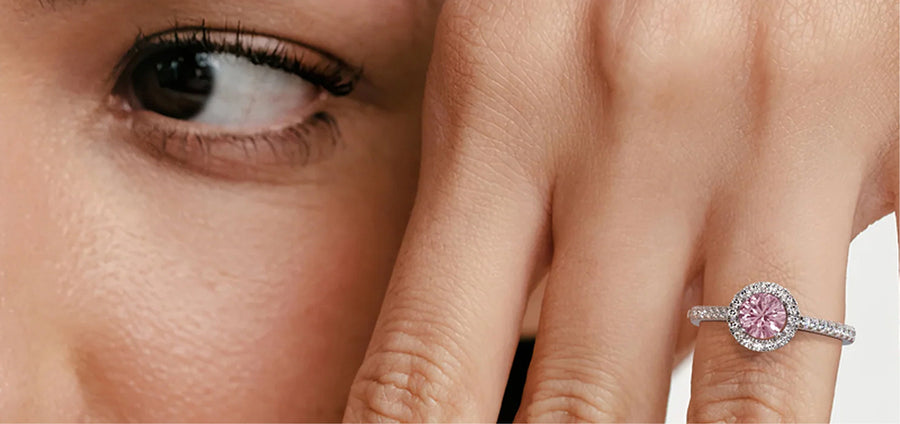
The main difference between a lab-grown pink sapphire and a natural pink sapphire is how the gemstone is formed.
Natural pink sapphires develop within the Earth over geological timescales, while lab-grown pink sapphires are created in controlled laboratory environments.
Both kinds of sapphire share the same essential chemical composition, crystal structure, hardness and optical properties.
However, lab-grown pink sapphires are generally more affordable than comparable natural gemstones, particularly when choosing larger stones with attractive colour and clarity.
Natural pink sapphires are valued for their geological origin and rarity, while lab-grown varieties offer an alternative for customers who prioritise colour, appearance and value.
Neither should be confused with imitation gemstones, which may resemble sapphire but have a different chemical composition.
Discover the differences in our Natural Pink Sapphire Gem Guide.
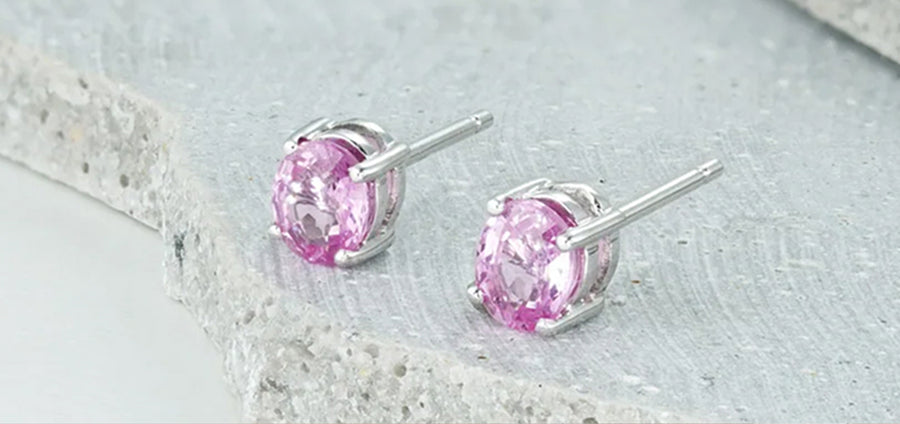
Lab-grown pink sapphires are extremely durable, ranking 9 on the Mohs scale of hardness.
This makes them suitable for regular wear, including engagement rings. However, like natural sapphires, they can still chip or become damaged if knocked against a hard surface.
To clean lab-grown pink sapphire jewellery, use warm water, mild washing-up liquid and a soft brush.
Gently clean around the gemstone and setting to remove dirt or residue, then rinse carefully and dry with a soft, lint-free cloth.
Avoid harsh chemicals, sudden temperature changes and unnecessary impact.
Store your jewellery separately from other pieces to help prevent scratches, and have the settings checked periodically to ensure the gemstones remain secure.
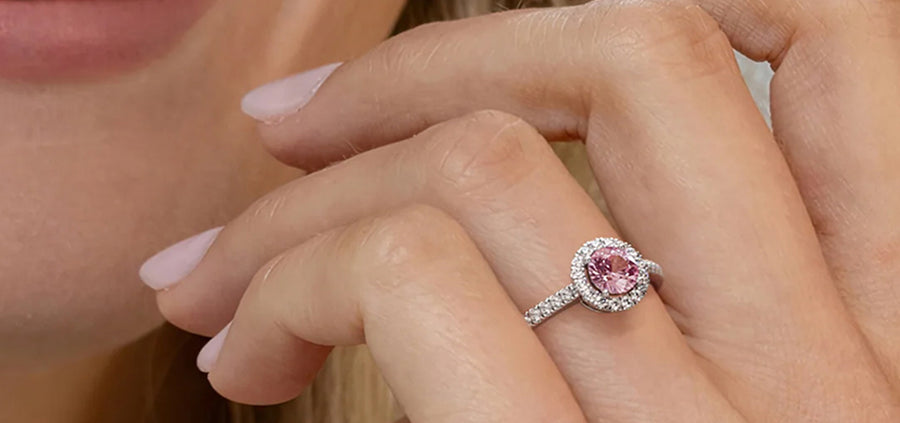
Throughout history, sapphires have been associated with wisdom, truth, loyalty and protection.
Although lab-grown pink sapphires are a modern creation, they share the same gemstone identity and traditional symbolism as natural sapphires.
Pink sapphires are particularly associated with love, compassion, kindness and emotional connection.
Their romantic colour makes them a meaningful choice for engagement rings, anniversary gifts and jewellery celebrating personal milestones.
Today, lab-grown pink sapphires offer a modern way to express these timeless sentiments.
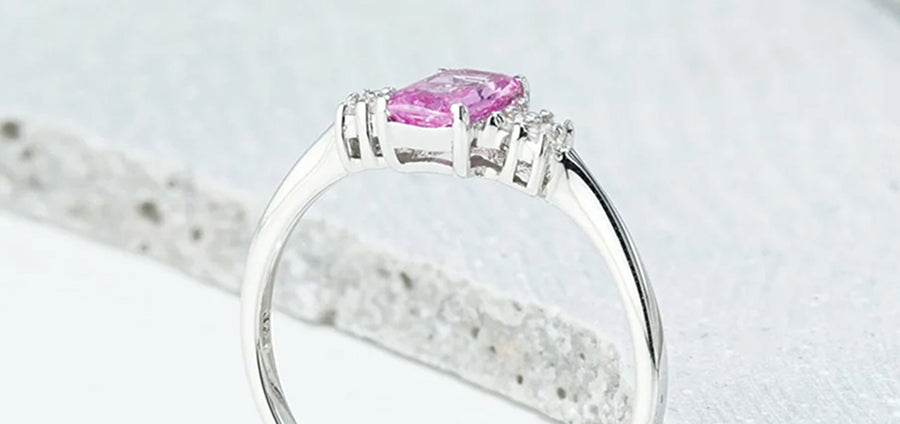
A lab-grown pink sapphire is a sapphire created in a controlled laboratory environment. It belongs to the corundum mineral family and has the same essential chemical composition, hardness and optical properties as a natural pink sapphire.
Lab-grown pink sapphires have the same fundamental crystal structure and chemical composition as natural sapphires. The difference is that they are created in a laboratory rather than formed within the Earth.
Lab-grown pink sapphires are produced using specialist crystal-growth techniques, such as flame fusion or flux growth. These processes create corundum crystals in controlled conditions, with trace elements such as chromium producing their pink colour.
Natural pink sapphires form within the Earth, while lab-grown pink sapphires are created in laboratories. Both share the same essential gemstone properties, but lab-grown sapphires are generally more affordable than comparable natural stones.
Yes. Lab-grown pink sapphires typically cost less than natural pink sapphires with comparable appearance and specifications. Their controlled production makes it possible to create gemstones with attractive colour and clarity at a more accessible price point.
Lab-grown pink sapphires have value as gemstones used in fine jewellery, although they are generally less expensive than comparable natural sapphires. Their price depends on factors including size, colour, cut, clarity and the jewellery setting.
Lab-grown pink sapphires are not rare in the same way as naturally occurring pink sapphires because they can be produced in controlled environments. However, the quality and appearance of individual lab-grown gemstones can still vary.
Yes. In gemmology, synthetic sapphire is the technical term for laboratory-created sapphire with essentially the same chemical composition and crystal structure as natural sapphire. Lab-grown and lab-created are commonly used consumer-facing terms for the same category.
Yes. Lab-grown pink sapphires rank 9 on the Mohs scale of hardness, making them durable enough for engagement rings and regular wear. Their romantic colour also makes them a meaningful alternative to traditional diamond engagement rings.
Yes. Lab-grown pink sapphires are highly resistant to scratching and suitable for everyday jewellery. However, they should still be protected from hard knocks, and gemstone settings should be checked regularly.
Lab-grown pink sapphires generally have stable colour under normal wearing conditions. However, colour stability can depend on the gemstone's growth process and any subsequent treatments. Avoid unnecessary exposure to extreme heat and follow the retailer's care instructions.
Yes. Lab-grown pink sapphires reflect and refract light in the same way as natural sapphires. A well-cut gemstone with good clarity can display attractive brilliance, although sapphires have different optical properties from diamonds.
The best colour depends on personal preference. Lab-grown pink sapphires range from soft blush to vivid magenta. Look for an attractive, evenly distributed pink colour that complements the jewellery design.
Oval and round cuts are popular choices, although lab-grown pink sapphires are also available in cushion, pear and other shapes. A good cut should enhance the gemstone's colour, brightness and proportions.
No. Lab-grown pink sapphires and pink diamonds are different gemstones. Sapphire is made from aluminium oxide and ranks 9 on the Mohs scale, while diamond is made from carbon and ranks 10. They also have different optical properties and appearances.
Yes. Lab-grown pink sapphires offer a colourful alternative to pink diamonds, typically at a more accessible price point. Their durability and romantic shades make them particularly suitable for engagement rings and meaningful jewellery gifts.
Lab-grown pink sapphires share the traditional symbolism of natural pink sapphires, representing love, compassion, sincerity and emotional connection. They're a thoughtful choice for romantic gifts and personal milestones.
September. Sapphire is the traditional birthstone for September, and lab-grown pink sapphires share the same birthstone association as natural sapphires.
Sapphires are traditionally associated with the 5th and 45th wedding anniversaries. Lab-grown pink sapphire jewellery offers a romantic way to celebrate these milestones.
Lab-grown pink sapphires complement a variety of precious metals. Yellow gold creates a warm, romantic contrast, while white gold and platinum provide a cooler, contemporary finish. The best choice depends on the gemstone's shade and personal style.
Yes. Lab-grown pink sapphires pair beautifully with natural and lab-grown diamonds. Diamond halos and side stones can enhance the pink centre stone's colour and add extra sparkle, particularly in vintage-inspired engagement ring designs.
Clean lab-grown pink sapphire jewellery using warm water, mild washing-up liquid and a soft brush. Gently remove any dirt around the gemstone and setting, rinse carefully and dry with a lint-free cloth. Avoid harsh chemicals and abrasive cleaning products.
Lab-grown and natural pink sapphires can look extremely similar to the naked eye. Specialist gemmological equipment and examination of internal growth characteristics may be needed to distinguish between them reliably.
Lab-grown pink sapphires offer an alternative to traditionally mined gemstones, as they're created in controlled laboratory environments without the need for gemstone mining. Their environmental impact depends on factors such as energy use and production methods.
At The Diamond Store, discover lab-grown pink sapphire jewellery, including vintage-inspired engagement rings featuring romantic pink centre stones and sparkling diamond halos. Explore designs in precious metals including white and yellow gold, perfect for meaningful gifts and special occasions.


